
How to Remove Copper Stains from Swimming Pools - United Chemical

How to Remove Copper Stains from Swimming Pools

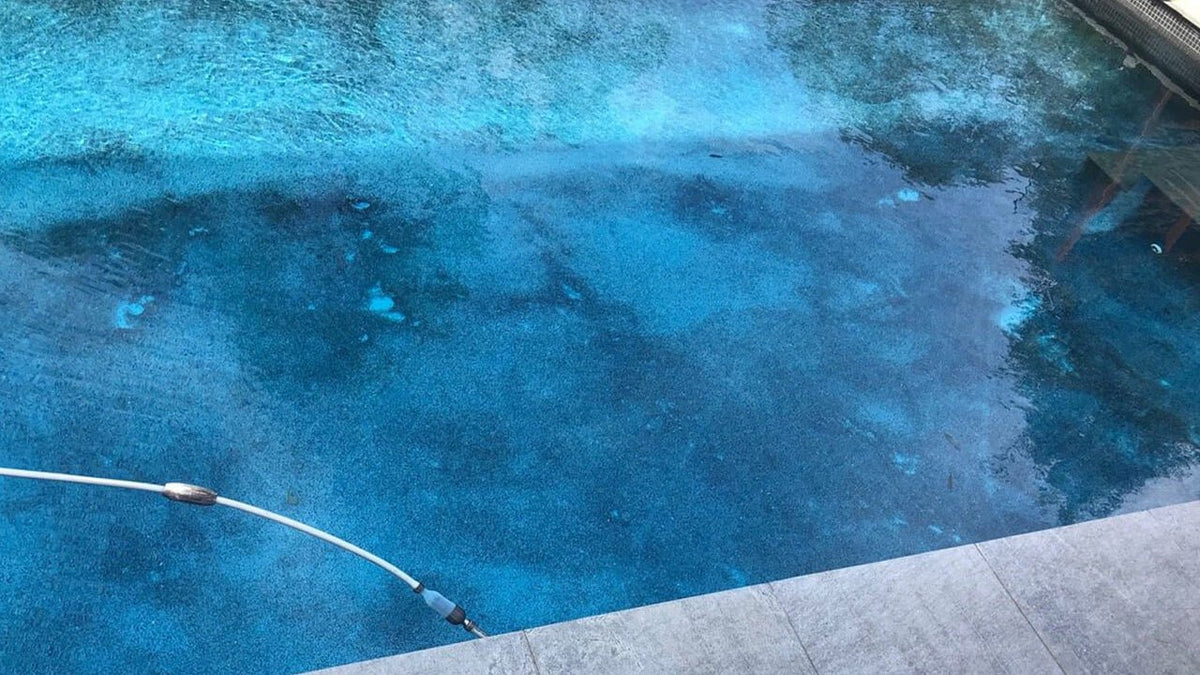
Blue-green stains on your pool surface are a clear sign of a copper problem. Maybe you’ve been using copper algicide or have a pool heater. Either way, we’ll show you the fast and easy way to remove your copper pool stains.

What Causes Copper Stains in Swimming Pools?

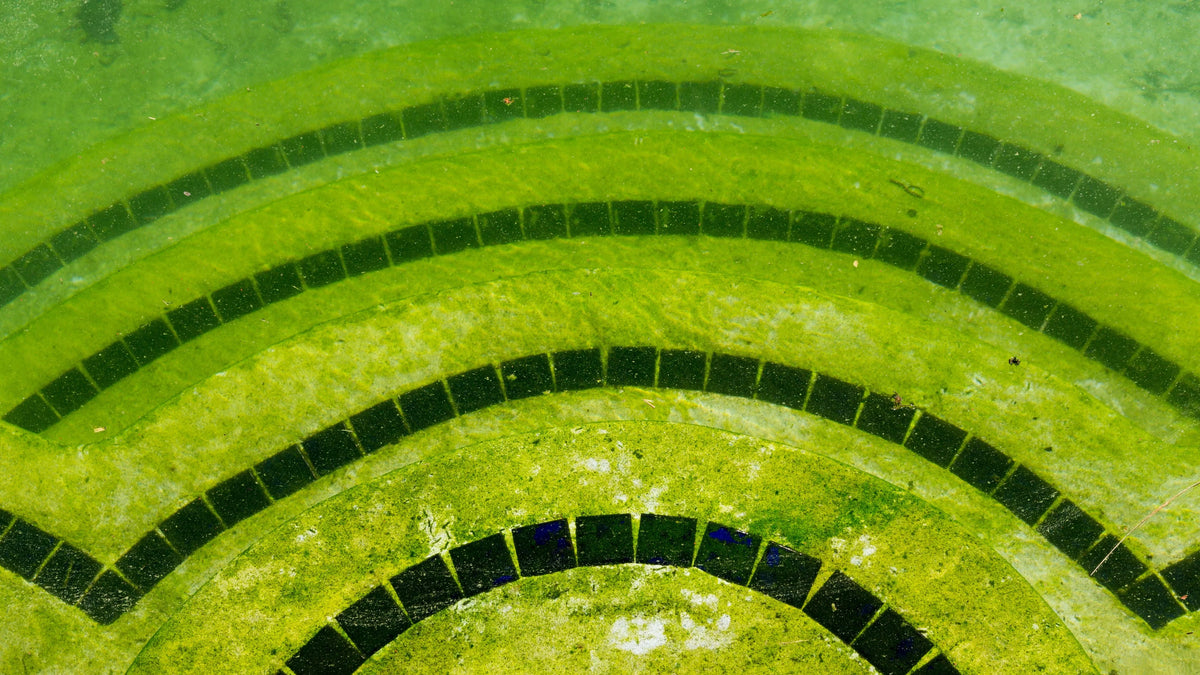
Creating a happy pool environment starts with understanding what’s in your water. Those distinct blue, green, black, or dark purple stains are actually oxidized copper attaching itself to your pool’s surface. But how does the metal get there?

Generally, copper enters your swimming pool through one of two pathways:

  • Equipment Corrosion: If your pool pH stays too low for too long, the acidic water can eat away at copper heat exchangers or piping, dissolving the metal into the water.
  • Copper-Based Algaecides: Many standard algaecides rely on copper to kill algae. If these are overused or not properly managed, the copper levels can rise too high.

Once the copper is in the water, a “trigger” event—like a high pH spike or a heavy shock of chlorine—causes the dissolved copper to fall out of solution (precipitate) and plate onto the walls and floor. It’s chemistry gone wrong, but don’t worry—we can fix it.

The Science of Removal: How It Works

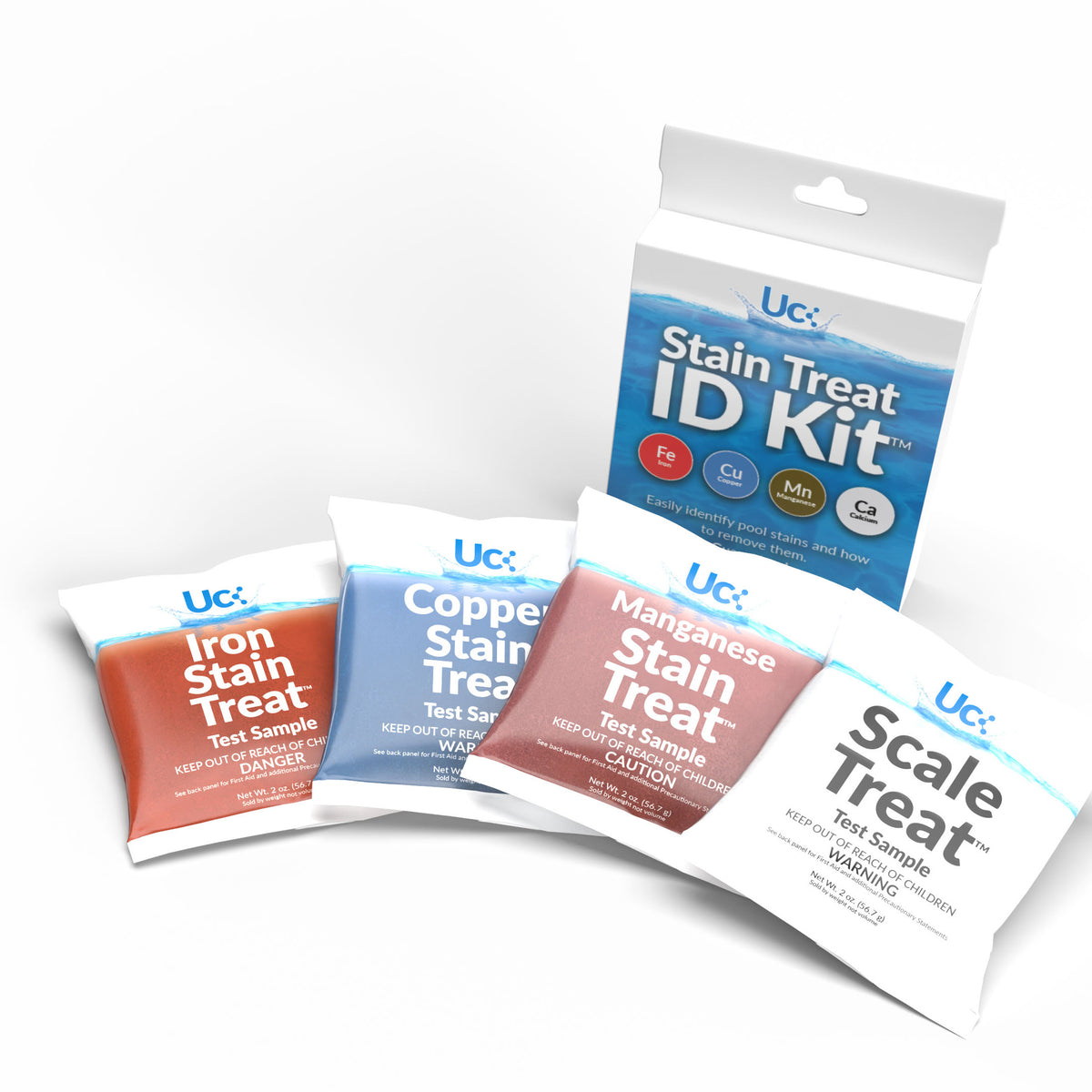
To remove the stain, we must break the bond between the oxidized metal and your pool surface. Products like our Copper Stain Treat™ are designed to act as a powerful reducing agent. When applied, the treatment chemically solubilizes the metal, effectively “lifting” it off the plaster or liner and returning it to the water in a dissolved state.

Once the copper is free to float again, it is crucial to use a sequestering agent. Think of this as a chemical magnet that grabs onto the copper ions and holds them tight, preventing them from oxidizing and re-staining your pool. This ensures you aren’t just treating the symptom, but solving the problem for good.

Step-by-step

01

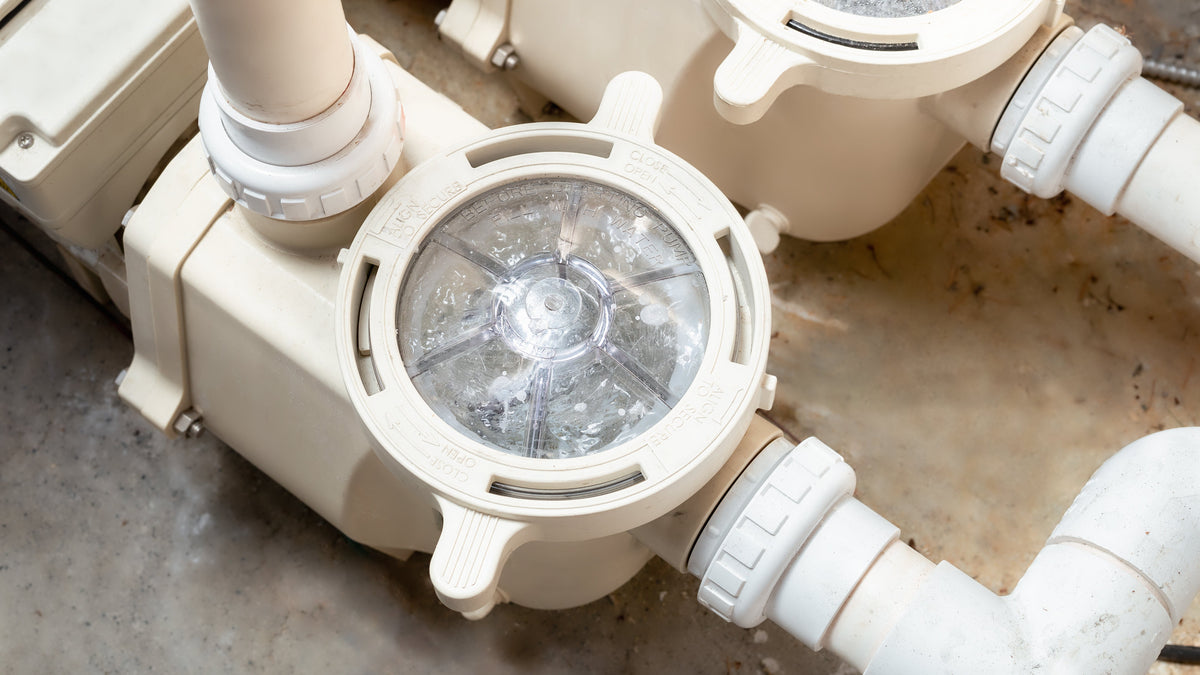
Turn off the pump

Turn off your pump system and bypass the timer. Do not turn the pump back on until your pH is above 7.2.
Turn off the pump
02

Lower chlorine

Lower the chlorine level to below one (1) ppm – the lower the better – by either abstaining from adding chlorine or using a chlorine neutralizer, such as No Mor Chlor™ or an equivalent product.
03

Lower pH and Alkalinity

Lower the pH to 7.2 and the Total Alkalinity to 80 ppm or below by using a pH decreaser and Alkalinity decreaser, such as No Mor Muriatic Acid™ or a conventional liquid acid. If you need to lower alkalinity only, you can use Easy Alkalinity Down™ or an equivalent dry acid.

When adding dry acid, make sure to dissolve the chemical in a clean bucket of water before pouring it evenly around the pool, and brushing any sediment.
04

Add Copper Stain Treat

Add 1 lb of Copper Stain Treat™ per 10,000 gallons.

For pools where color fastness is a concern, or for areas with widespread staining, dissolve Copper Stain Treat™ in a clean bucket of water, then pour it evenly around the pool's perimeter, followed by a quick brushing. Some clouding is normal and will subside in 24 hours.
Add Copper Stain Treat
05

Wait 24 hours for results.

Wait 24 hours for results. Repeat the application as necessary.
06

Raise pH.

Raise the pH using Easy pH Up™ or Sodium Bicarbonate (Baking Soda).

Soda Ash is not recommended, as it may trigger clouding and staining.
Raise pH.
07

Raise chlorine slowly.

Raise the chlorine reading slowly, avoiding increases of more than 5 ppm per dose per day. Larger doses may trigger staining. Refer to your chlorine manufacturer for dosing isntructions.
08

Add No Mor Stain and Scale

Use No Mor Stains & Scale™ weekly to keep the pool free of stains.
Add No Mor Stain and Scale

Leave a comment

All comments are moderated before being published.

This site is protected by hCaptcha and the hCaptcha Privacy Policy and Terms of Service apply.