
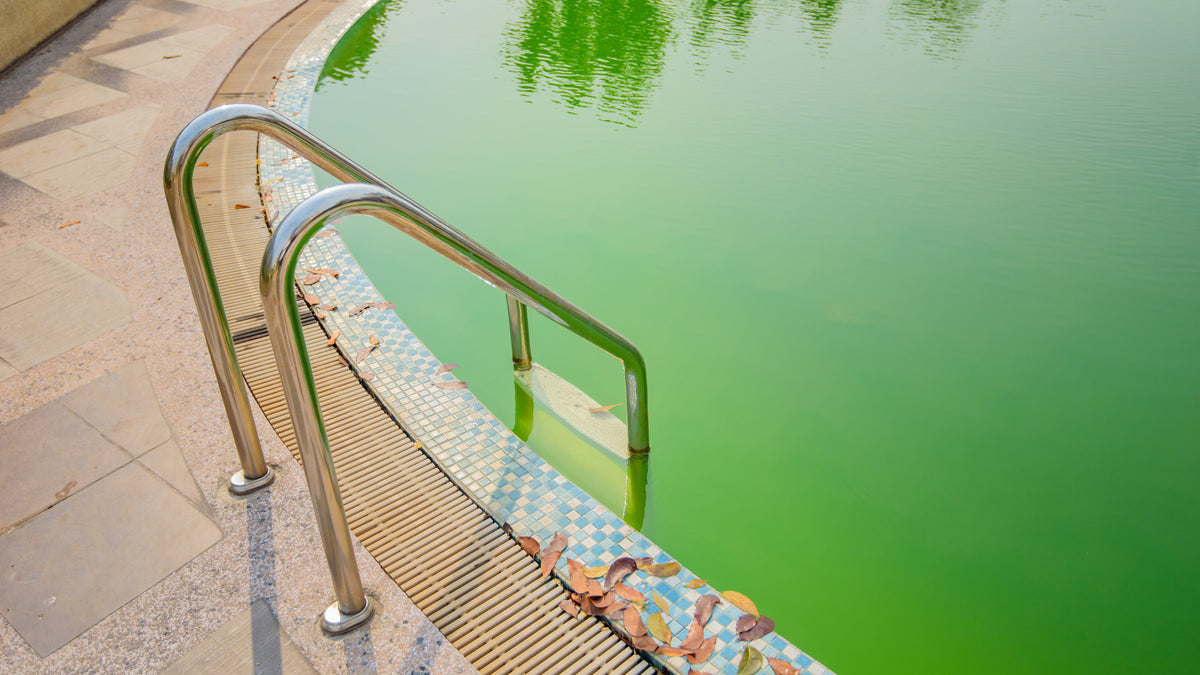
The US EPA has decided to require sodium bromide products to have a label that reads, “Not for use in outdoor pools.” This is due to concerns about bromate formation in outdoor pools.
We are a science and education-based company. My father, Jock, built this company primarily through his education in the water chemistry industry. Our core values as a company include honesty and education.
In that spirit, we will provide all the background information leading to the US EPA’s latest decision, the science behind it, our interpretation, and our next steps as a company in addressing the concerns.
Of course, we have a vested interest in sodium bromide, having pioneered its use in the swimming pool industry in the early 1980s. So, there is an inherent bias. Therefore, we will attach all related documents and cite the studies mentioned here so that you may read the information directly and form your own conclusions.
What is Bromate?
Bromate is an oxyanion with the formula BrO3-. Bromate is formed when Bromide is oxidized from an oxidation number of -1 to +5. The assumed pathway is from Bromide (-1) to Bromine (0) to Hypobromite (+1), Bromite (+3) and then Bromate (+5).
Why is Bromate a Concern?
Studies have shown that exposure to Potassium Bromate led to renal cancer in mice (Kurosawa et al., 2001). The consensus is that bromate induces oxidative stress, which can promote the formation of cancer cells.
However, as one study pointed out (Fawell et al., 2006), it’s unclear at what levels, and through which pathways, bromate exposure leads to renal cancer formation – and how relevant this is to human exposure.
This has led bromate to be classified as a “probable human carcinogen.” As a result, the U.S. EPA sets a maximum acceptable contaminant level (MAC) of 10 ppb for drinking water.
Why is the EPA concerned about Bromates in Pools?
The EPA has the authority to regulate pesticides according to the Federal Insecticide, Fungicide, and Rodenticide Act (FIFRA). Anytime a product claims to kill an organism—in our case, algae—it is under their jurisdiction to regulate.
2005 Arch Chemical Letter
On January 24th, 2005, Arch Chemical sent a FIFRA 6(a)(2) letter to the EPA regarding concerns over the potential for bromine to produce bromate as a disinfecting byproduct when used in pools. Arch ran a study using an 88.8% sodium bromide-based algaecide (likely the original Yellow Treat) at 250 ppm, rather than the 3.75 ppm standard dose (66 times the normal dose). The study showed an upward of 50% conversion of bromine into bromate via calcium hypochlorite and UV sunlight, using estimates via regression analysis.
They stated that they had a duty to report because they held bromine-based registrations. However, choosing to use our product – a competitor – rather than their products for such a study does call their motivations into question.
2005 EPA Initial Response
The EPA acknowledged Arch’s “exaggerated application of sodium bromide” (Docket EPA-OPP-HQ-2009-0168). However, Arch performed a risk assessment for all bromine-containing hydantoins with the given assumptions, and the EPA reviewed it
To evaluate the risk, they used the Swimmer Exposure Assessment Model (SWIMODEL), which calculates exposure to a given substance based on assumptions about swimmer behavior. They also included a cancer risk slope factor, which estimates how much exposure to a given substance and what consistency may result in cancer formation. They used 0.7 mg/kg/day (i.e., 0.7 mg per kg of body weight per day) for the evaluation.
Cancer risk is then assessed by multiplying the Lifetime Average Daily Dose by the cancer risk factor. As an added precaution, exposure to children under 2 is multiplied by 10, while exposure to children ages 2-16 is multiplied by 3.
The highest aggregate risk factor was estimated at 3.5E-4 (0.00035), or 35 in 10,000, for brominated hydantoins.
2005 American Chemistry Council Analysis
The American Chemistry Council (ACC) Brominated Biocide Panel responded to the Arch Chemical study in 2005 with a letter to the EPA, noting issues with what was presented.
The first was regarding testing for bromate. Per the letter:
“…it is not clear why these pools were not shocked nor were loaded with organic matter until after a bromate level of 0.25 ppm was measured. These two actions would tend to have opposite effects on potential bromate formation, since shocking would tend to promote oxidation, including oxidation of bromide to bromate and adding organic load would reduce the level of oxidant available for bromide oxidation.”
They also note that using sodium bromide is odd when evaluating hydantoins. However, they mention that sodium bromide would be more likely to produce bromate by comparison in the given scenario.
They also mentioned that one of the panel companies did a study using BCDMH in outdoor pools under real-world conditions and found that the amount of detectable bromate was far less than what Arch had claimed.
They further reviewed the risk assessment and found that the risks were exaggerated. First, they noted that the slope factor of 0.7 for bromate was used and suggested using the World Health Organization’s (WHO) value of 0.19. When they computed the data again, they found the following:
“The results indicate the cancer risk to all groups is less than 10E-5, except for competitive adult swimmers where the risk is slightly above this level. In fact, actual risks may be even lower since the estimated risk levels are based on a series of conservative assumptions…”
That’s a risk factor closer to 10 in 100,000.
They then concluded that the Arch data “contain too many uncertainties in scientific reliability for use by the Agency.”
2020 Bromate Work Group study
In 2020, the Center for Biocide Chemistries Bromate Work Group (consisting of Biolab, Lonza, ICL-IP, and XTY Environtech) submitted to EPA a study that simulated sodium bromide use in outdoor pools to look for potential bromate formation (Docket EPA-HQ-OPP-2009-0168-0022).
They found that the presence of Body Fluid Analog (BFA), comprising ammonium and urea, as well as Humic Acid (HA), which serves as an analog of organic matter, completely mitigated bromate formation, with a sensitivity limit of 0.6 ppb.
This suggests that using sodium bromide where algae and swimmers are present would result in little to no bromate formation.
Bromate formation was only detected when the water was completely free of organic matter. The study also suggested that bromate formation was fairly rapid, taking only a few minutes.
However, the EPA did not find the study acceptable because a variance in bromate was detected in the control samples.
They also, oddly, claimed that the calculations for solar exposure should measure 122,400 mJ/cm2, since UVB was used and comprises only 5% of UV light exposure.
I think the agency may have misunderstood. UVB has a shorter wavelength than UVA, which comprises 95% of the sunlight we are exposed to at ground level. Since this was done in a lab setting, they used UVB lamps set to output to the equivalent of daylight.
The UV Index, neglecting weighting, is 9 mJ/cm2 per UV index hour. Accounting for 24 hours per day would give us a maximum of 216 mJ/cm2 for each UV index value.
122,400 mJ/cm2 corresponds to a UV index of about 567. The highest recorded daily index was in Bolivia, at 43, although that value has also been questioned. If they were accounting for total exposure, the above value would be equivalent to about 57 days at a UV index of 10.
Converting UV into mJ/cm2 will be relevant later in this article.
2021 Interim Decision
In June 2021, the EPA issued an interim registration review decision focused on Halohydantoins (Interim Registration Review Decision Case Number 3055). Halohydantoins include the active ingredients bromochlorodimethylhydantoin (BCDM) and dibromodimethylhydantoin (DBDMH). The decision was to remove outdoor pool use due to the potential of bromate formation exposed to UV light.
They stated that, without sufficient data on real-world bromate formation, they would assume that all available bromine would convert to bromate.
They also included sodium bromide in the decision since it contains bromide.
This required labels of products containing bromide to add the following to the directions:
“This product is not for use in outdoor pools. Outdoor hot tubs and spas must be covered when not in use.”
Other Studies and Data
The EPA decided to remove outdoor pool use based on the very cautious assumption that all bromide converts into bromate in the presence of sunlight. This was done because the data provided did not meet their requirements.
So, what can we infer about actual bromate formation rates based on available data?
While data on bromide use in outdoor pools is limited, bromate formation in drinking water has been studied fairly extensively.
Here is a selection of well-cited studies on bromate formation and mitigation most relevant to swimming pools.
Sunlight-Induced Bromate Formation in Chlorinated Seawater (Macalady et al., 1977)
This oft-cited study notes the potential for 50% conversion of bromide to bromate. The original focus is chlorinated seawater interacting with natural bromine. Filtered seawater samples were dosed with Sodium Hypochlorite, buffered to pH 8.1 using sodium bicarbonate, and exposed to sunlight.
However, the initial concentration of bromine in the seawater remains unclear. As we will see in another study below, there appears to be an inverse relationship between the concentration of bromide and the amount of bromate produced; a lower concentration of bromide results in a higher amount of conversion of bromate (J. Fang, et. al. 2017).
It’s also worth noting that the method used to measure bromates in this study is not currently the most accurate for detecting bromates. The study also notes how difficult it was to accurately measure bromate concentration at the time.
Bromate formation from the oxidation of bromide in the UV/chlorine process with low-pressure and medium-pressure UV lamps (J. Fang et al., 2017)
This study examines the rate of bromate formation as a function of bromine concentration during exposure to chlorine and medium-pressure UVC.
UVA is the longer wavelength we are typically exposed to, while UVC is the higher-energy version used for disinfection. To draw an equivalence between UVA and UVC, both can be expressed in millijoules per square centimeter (mJ/cm2).
The energy of the UV index can be converted to millijoules per square centimeter. First, we multiply the UV by 0.025 to obtain the watts per square meter. Then, we multiply by the number of seconds in a day to convert to joules per square meter, and finally, we divide by 10 to obtain millijoules per square centimeter, which is what is used in the study.
UVindex x 0.025 = W/m2 x s = J/m2 / 10 = mJ/cm2
A UV Index of 10 (extreme) would equate to 2,160 mJ/cm2.
Pure sodium bromide contains about 77.7% bromide by weight. A typical dose is one pound dose (453.6 grams) per 20,000 gallons (75708.2 L), yielding a concentration of 4.6 ppm (4600 ppb).
| Br- Conc. | 200 mJ/cm | 400 mJ/cm2 | 600 mJ/cm2 | 800 mJ/cm2 |
| 100 ppb | 1 ppb BrO3- | 1.5 ppb BrO3- | 2 ppb BrO3- | 3 ppb BrO3- |
| 500 ppb | 3 ppb BrO3- | 8 ppb BrO3- | 9 ppb BrO3- | 11 ppb BrO3- |
| 1000 ppb | 7 ppb BrO3- | 14 ppb BrO3- | 18 ppb BrO3- | 20 ppb BrO3- |
| 2000 ppb | 12 ppb BrO3- | 21 ppb BrO3- | 29 ppb BrO3- | 37 ppb BrO3- |
The chart summarizes Figure 1 of the study, showing the relationship between Bromide concentration and UVC at a pH of 7.5
We can then express the above chart as a percentage of bromide converted to bromate:
| Br- Conc. | 200 mJ/cm | 400 mJ/cm2 | 600 mJ/cm2 | 800 mJ/cm2 |
| 100 ppb | 1% | 1.5% | 2% | 3% |
| 500 ppb | 0.6% | 1.6% | 1.8% | 2.2% |
| 1000 ppb | 0.7% | 1.4% | 1.8% | 2% |
| 2000 ppb | 0.6% | 1.05% | 1.45% | 1.85% |
Conversion values based on Figure 1 summary
Looking at the above data table, we can see some clear trends, particularly:
- As bromine increases, the percentage of bromate formed decreases
- As UVC increases, the relative increase of bromate decreases.
Using linear regression, we would find that the expected conversion rate for 4.6 ppm (4600 ppb) of bromide in water under UV Index 10 irradiation (approx. 2160 mJ/cm2) would be 0.73% into bromate, yielding a concentration of 33.6 ppb.
As we will see in the next study, the actual amount of bromate observed in swimming pools may be even lower due to other mitigating factors.
Controlling Bromate Formation During Ozonation With Chlorine and Ammonia (Neeman et al., 2004)
An article in the American Water Works Association summarizes a Southern Nevada Water Authority study on bromate mitigation in water treated with ozone. Bromate mitigation strategies were studied at the facility for three years.
Ozone is a powerful oxidizing agent used in water treatment. It produces bromates in bromide-containing water, so it’s been heavily researched in the drinking water industry.
The study concluded that the most effective approach was pre-oxidation with chlorine and the addition of ammonia.
The findings also resulted in a patent for this method of mitigating bromate formation.
This is especially relevant for swimming pools (pools are constantly treated with chlorine with periodic additions of sodium bromide as an algaecide) and validates some of the findings of the Bromate Workgroup 2020 Study (i.e. urea lowering bromate levels).
Next steps: the United Chemical study
According to the above information, it is very unlikely all the bromide, or even a large portion, is converted into bromate when used in swimming pools as intended.
There’s also evidence that organic material and ammonia greatly inhibit bromate formation, as numerous studies have referenced them as effective mitigators. This is especially relevant for pools where sodium bromide is used to combat algae and where swimmers sweat in the water.
Swimming pools may not face the same challenges regarding bromates as outdoor reservoirs used for drinking water because swimming pools have…well…swimmers.
However, because the US EPA cited insufficient data, United Chemical has proposed a study to the US EPA to obtain concrete, scientifically sound data and test the above assumptions.
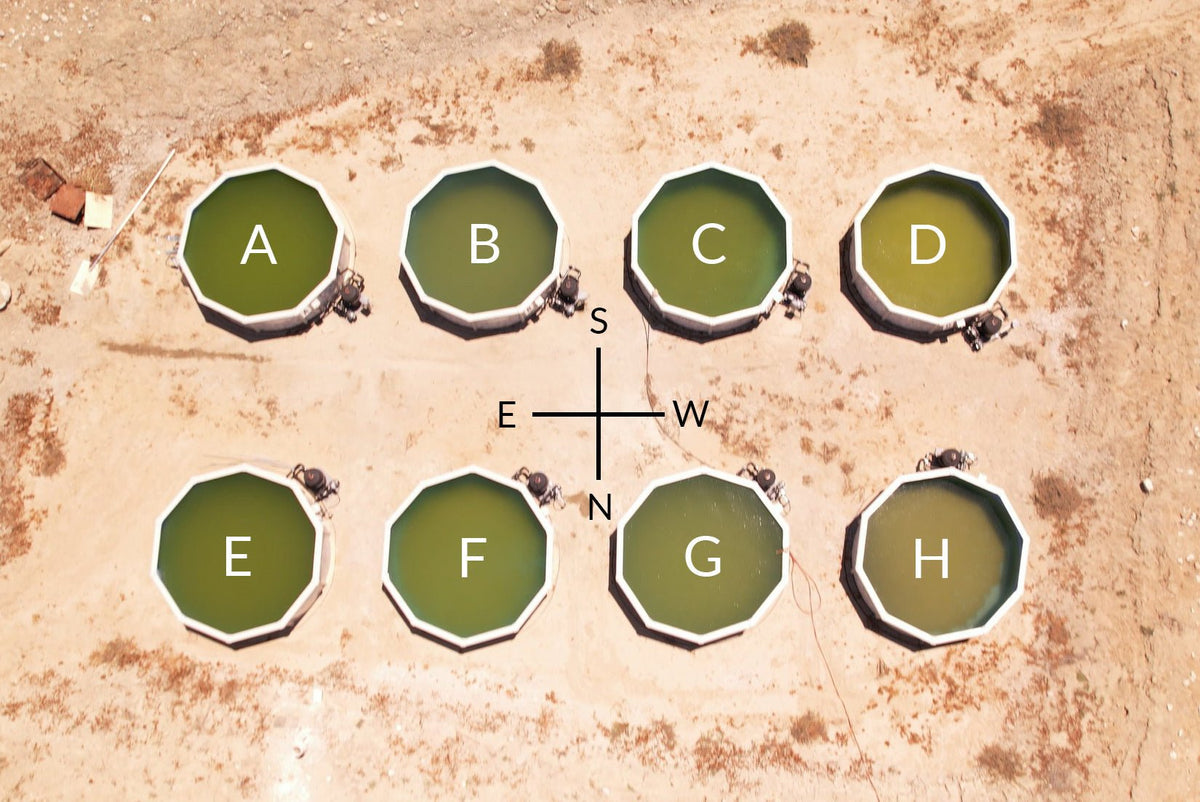
We submitted a study proposal to the US EPA comparing typical sodium bromide use in four identical above-ground vinyl outdoor pools at our California location. Two pools will be treated with maintenance doses of Sodium Bromide, and two will be allowed to grow algae and then treated with a rescue dose.
We proposed using sodium hypochlorite (liquid chlorine) as the sanitizer for the study. First, it has the highest pH and is the most likely to generate bromates based on existing data. Second, it is one of the more common chlorination methods used by service professionals. Third, it is the type of chlorine generated in salt systems. This means that all data obtained should be widely applicable to the industry.
We have contracted Eurofins Scientific, one of the country’s most respected labs, to test samples taken from the pools for bromate.
The US EPA will need to review, assess, and approve the protocols and study structure before we can proceed with the official study. We plan to publish all data.
Conclusion
In summary, while the EPA has not banned sodium bromide, it now requires that products be labeled as not for use in outdoor pools. The agency assumes the worst-case scenario, in which there is 100% conversion of bromide to bromate, until proven otherwise. They cite a lack of direct data on bromate formation in pools that meet the agency’s standards.
Based on existing studies, it’s unlikely that bromate is formed in outdoor swimming pools when used as directed in combination with chlorine. Bromates likely form at much lower rates, even under ideal conditions. And things like organic matter and sweat have been shown to virtually eliminate bromate.
While we would prefer that the agency wait for more direct data and fill in some gaps before taking this action, we understand their position and their desire to keep swimmers safe.
To fill those gaps, we have proposed a study to share more direct data on bromate formation in pools with the agency. We are currently waiting for the agency’s review and approval before proceeding.
Our priority is always the safety and health of our customers. I can assure you that we will always go where the science takes us. Just as it always has.