

The Two Types of Pool Stains
While there are quite a few kinds of stains you may encounter, we can simplify things by classifying them into two types: Organic and Inorganic.
- Organic: The term “organic” simply means a chemical contains carbon. Since life is carbon-based, an organic stain is typically from something that was once alive.
- Inorganic (Metal): These stains don’t (usually) contain carbon and are usually the result of a metal that has precipitated from solution.
Organic Staining
Organic stains aren’t much different from the typical stains on your clothes, like grass or mustard, and removing them follows a similar approach.
What do organic stains look like?
They typically look like smudges on the surface. They can range in color between tan and green, depending on what caused the stain. In some cases, you can actually scrape some of the residue off the surface.
Where do they come from?
These are typically the remnants of leaves, debris, or dead algae that accumulate at the bottom of the pool. The pigments leach onto the surface to form a chemical bond.
How do I remove organic stains?
Luckily, organic stains are pretty easy to remove. Just like using bleach or OxyClean on laundry, the solution is oxidation.
- Shock the Pool: The most straightforward way is to shock your pool and “bleach” the stain from the surface.
- Use an Oxidizer: You can also use specific stain removers, designed to oxidize the stain directly.
Inorganic (Metal) Stains
Metal stains are a bit trickier to deal with. Metals can become insoluble, meaning they no longer remain dissolved in water. When they “drop out” of the water, they react with the surface, forming stains.
This often happens due to a water balance issue. For example, if your pH is high (above 8.3), calcium becomes less soluble and is more likely to form scale.

Metal Flashing
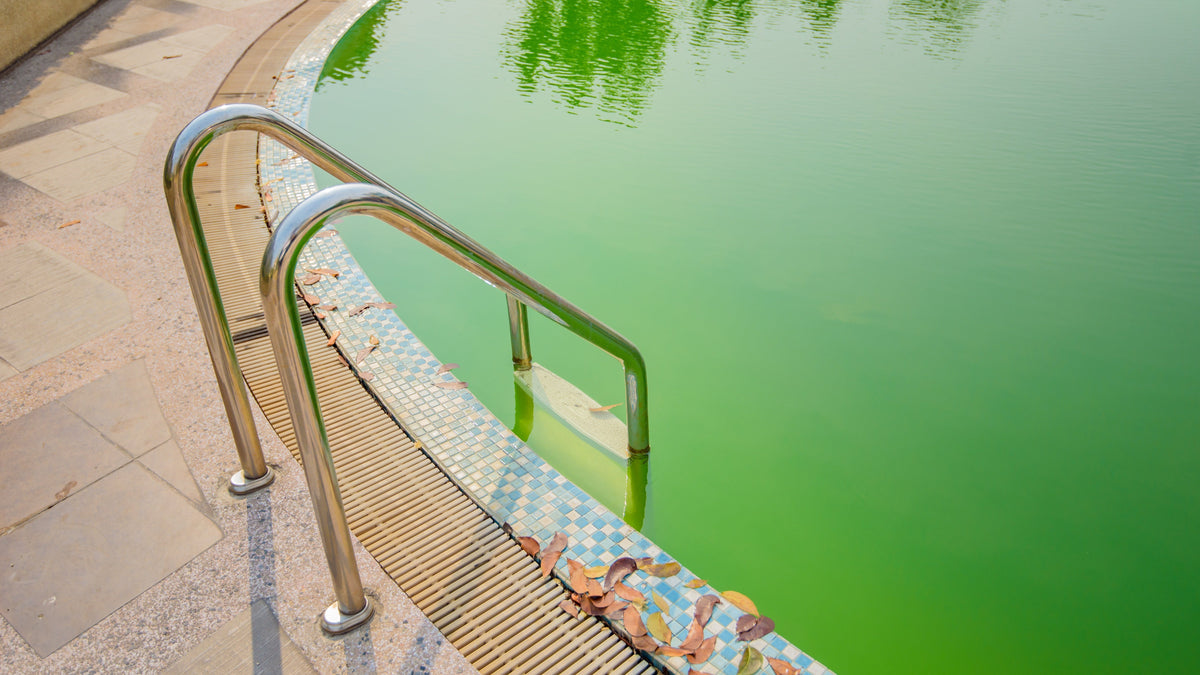
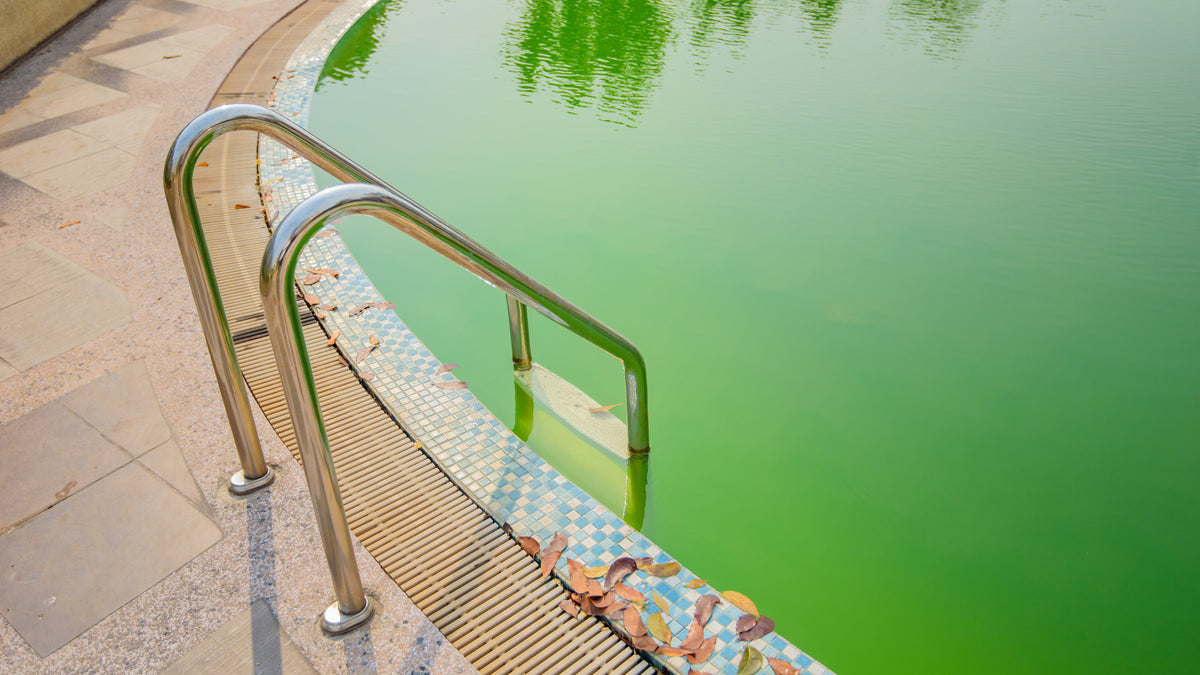
If your pool water suddenly changes color (often to green) after adding chemicals—especially chlorine—you are experiencing “Metal Flashing”.
- The Look: The water remains clear, but the metals refract light, changing the water’s hue.
- The Fix: Stop adding chemicals immediately. Lower your Total Alkalinity and add a chelating agent to bind the metals back into a soluble state.
Iron Stains
Iron is a very common metal found in source water, especially if you fill your pool from a well.
- Appearance: Light tan to very dark brown/red.
- Sources: Well water, galvanized pipes in older homes (pre-1920s), or iron-rich dirt and fertilizer runoff. Occasionally, rusting rebar from improper concrete pouring can bleed through the surface.
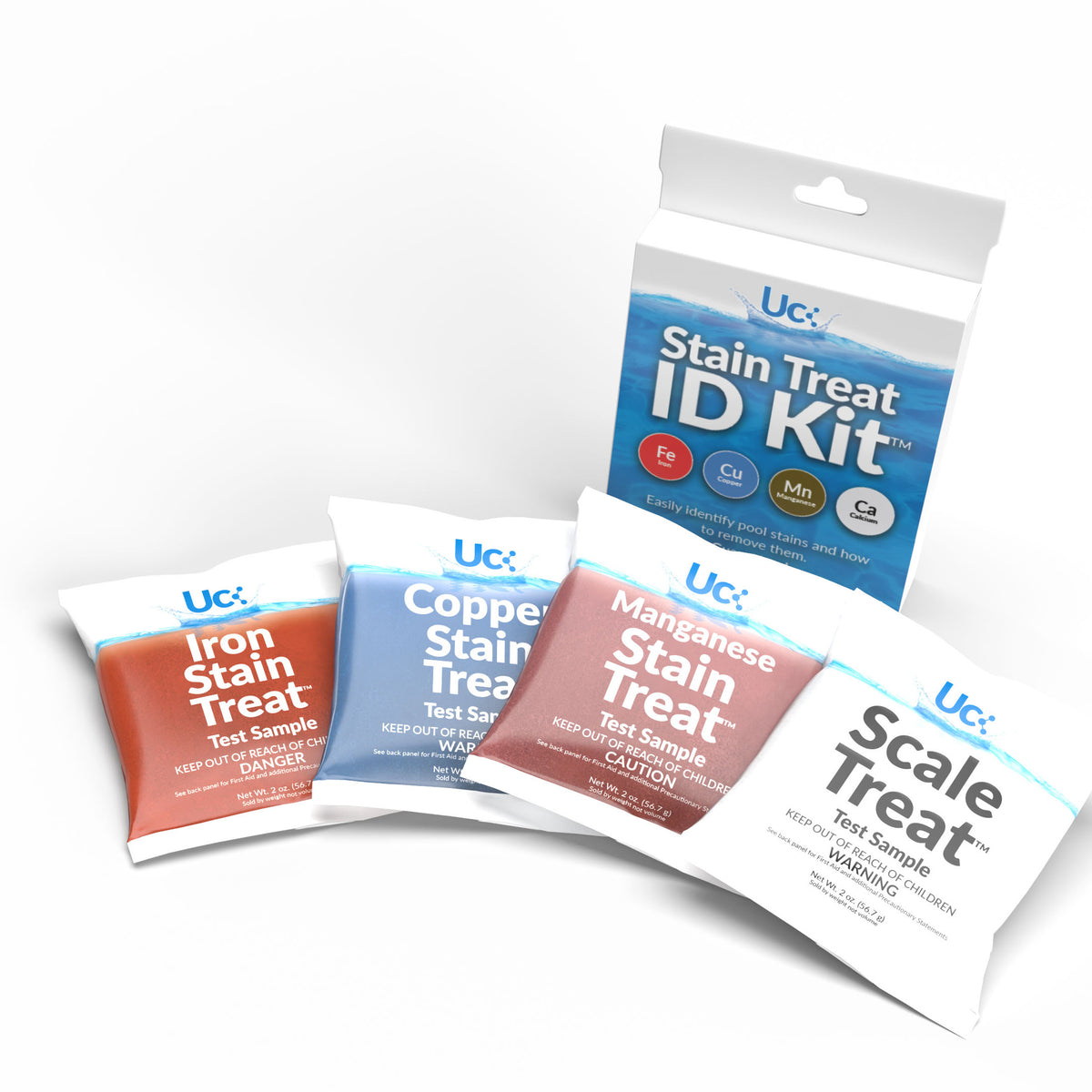
- Treatment: Iron is responsive to treatment. Use an Oxalic acid-based remover, like Iron Stain Treat, which reacts extremely well with iron to form water-soluble compounds.
Copper Stains
Copper is another abundant metal that can cause significant staining.
- Appearance: Green, dark blue, or even black.
- Sources: Often from copper-based algaecides or older copper pool heaters leaching metal into acidic water.
-
Treatment: For removing copper stains, we recommend using Sulfamic Acid and Citric Acid.
- Sulfamic Acid: This is a strong acid often used in descaling applications that is effective at breaking down copper deposits.
- Citric Acid: While often used as a gentler chelating agent, please exercise caution. Important Safety Note: When Citric Acid is mixed with chlorinated pool water, there is a risk of producing chloroform (a haloform reaction). Ensure your chlorine levels are low and the area is well-ventilated before use.
Manganese Stains
- Appearance: Purple to dark brown-black. In severe cases, the water itself turns magenta.
- Treatment: Treat with ascorbic acid or strong reducing agents like Sodium Bisulfite.
Cobalt Staining (Fiberglass Pools Only)
- Appearance: Grey-black spots, sometimes with a slight bump you can feel.
- Source: Cobalt is a hardening agent in fiberglass resin. In older pools, it can leach out into the water.
- Treatment: Oxalic and Ascorbic acids can dissolve the surface cobalt, but regular stain remover use is recommended to keep it at bay.
Avoiding Stains: An Ounce of Prevention
As Benjamin Franklin said, “An ounce of prevention is worth a pound of cure”. Here is how you can stop stains before they start:
- Lower Alkalinity: High alkalinity increases the likelihood that metals will precipitate from solution. Lowering Total Alkalinity by just 10 ppm can prevent staining.
- Avoid Metal Algaecides: They can eventually cause staining. Try to avoid them whenever possible.
- Minimize Shocking: Shocking oxidizes metals, causing them to stain. Reduce frequency where possible.
- Use Chelating Agents & Sequestrants: These bind metals into water-soluble compounds, allowing your filter to remove them before they stain your beautiful pool.